
Just Mercy Reading Guide: A Comprehensive Plan
This guide offers a deep dive into Bryan Stevenson’s Just Mercy, providing summaries, discussion points, and activities
for enriching your reading experience and fostering critical thought.
Explore the book’s core themes, character analyses, and the systemic issues within the justice system,
all while prompting personal reflection and engaging book club discussions.
Utilize this resource to navigate the complexities of the narrative and understand the profound impact of mercy,
redemption, and the fight for equal justice for all individuals.
Bryan Stevenson’s Just Mercy: A Story of Justice and Redemption is a powerful memoir detailing his career as a lawyer defending wrongly convicted and disadvantaged individuals.
The book serves as a compelling introduction to the realities of the American criminal justice system and the pervasive issues of racial bias and socioeconomic inequality.
Stevenson founded the Equal Justice Initiative (EJI) in Montgomery, Alabama, dedicating his life to providing legal representation to those most in need.
His work highlights the urgent need for compassion, understanding, and systemic reform within the legal framework.
This reading guide aims to facilitate a deeper understanding of Stevenson’s experiences and the profound impact of his advocacy.
It encourages readers to critically examine the narratives presented and to consider their own roles in promoting justice and challenging societal biases.
Prepare to confront uncomfortable truths and engage in meaningful discussions about mercy, redemption, and the pursuit of a more equitable world.
II. Core Themes of the Book
Just Mercy revolves around several interconnected and crucial themes that challenge readers to confront difficult realities. Central to the narrative is the exploration of systemic injustice, particularly racial bias within the criminal justice system, and its devastating consequences for marginalized communities.
The book powerfully illustrates the importance of mercy and compassion, advocating for a more humane approach to punishment and rehabilitation. Stevenson argues against the death penalty, highlighting its flaws and disproportionate application based on race and socioeconomic status.
Furthermore, the narrative emphasizes the significance of due process and the right to adequate legal representation, exposing the vulnerabilities of those without resources. Finally, the theme of redemption underscores the potential for transformation and the enduring hope for justice, even in the face of profound adversity.
III. Chapter-by-Chapter Summary & Discussion Points (Part 1)
This section provides a structured overview of the initial chapters of Just Mercy, offering summaries and prompting insightful discussions. Chapters 1-3 detail Stevenson’s early experiences with injustice and the formative influences that led him to dedicate his life to defending the wrongly convicted. Discussion should focus on the impact of his grandmother’s stories and the roots of his commitment.
Chapters 4-6 introduce Walter McMillian’s case, a harrowing example of racial bias and wrongful conviction. Analyze the initial investigation, noting the inconsistencies and questionable evidence. Consider the societal context and the prejudices that contributed to McMillian’s predicament.
Chapters 7-9 delve deeper into the flaws of the investigation and the biased trial proceedings. Examine the witness testimonies and the prosecutorial misconduct. Reflect on the power dynamics at play and the challenges Stevenson faced in challenging the established narrative;

III.A. Chapters 1-3: Early Experiences & The Equal Justice Initiative’s Founding
These foundational chapters establish Bryan Stevenson’s personal motivations and the genesis of the Equal Justice Initiative (EJI). Stevenson recounts impactful stories from his childhood, particularly those shared by his grandmother, highlighting the pervasive racial inequality and systemic injustices prevalent in the American South. Discuss how these early experiences shaped his worldview and fueled his desire to pursue a career in law.
The narrative details his education at Harvard Law School and his subsequent decision to dedicate his legal skills to representing marginalized individuals. Explore the challenges he faced in shifting the focus from corporate law to public interest work. Consider the founding principles of EJI and its mission to challenge systemic injustices within the criminal justice system.
III.B. Chapters 4-6: Walter McMillian’s Case ⎼ Initial Investigation
These chapters introduce the harrowing case of Walter McMillian, a Black man wrongly convicted of murder in Alabama. Stevenson begins his investigation, quickly uncovering inconsistencies and troubling evidence that cast doubt on McMillian’s guilt. Analyze the initial police investigation, noting the reliance on coerced testimony and the disregard for exculpatory evidence.
Discuss the racial biases that appear to have influenced the investigation and prosecution. Examine the role of Sheriff Gillespie and his deliberate manipulation of evidence to secure a conviction. Consider the challenges Stevenson faces in navigating a deeply entrenched system resistant to acknowledging its errors. Reflect on the power dynamics at play and the vulnerability of McMillian within this unjust system.
III.C. Chapters 7-9: The Flaws in the Investigation & Trial
These chapters meticulously detail the profound flaws within the investigation and subsequent trial of Walter McMillian. Stevenson exposes the fabricated evidence, particularly the problematic testimony of Henry Hays, a key witness whose statements were riddled with inconsistencies and motivated by personal gain. Discuss the inadequate representation McMillian received from his initial legal counsel, highlighting the lack of thorough investigation and challenge to the prosecution’s case.
Analyze the courtroom dynamics and the judge’s apparent bias, contributing to the unfair proceedings. Consider the impact of racial prejudice on the jury’s decision-making process. Reflect on the systemic failures that allowed a wrongful conviction to stand, and the devastating consequences for McMillian and his family. Examine how easily the justice system can be manipulated by bias and misinformation.
IV. Chapter-by-Chapter Summary & Discussion Points (Part 2)

This section delves into the latter half of Just Mercy, continuing to unpack Bryan Stevenson’s impactful cases and the systemic injustices he confronts. Explore the escalating challenges faced while advocating for his clients, navigating a deeply flawed legal landscape. Discuss the emotional toll of witnessing the suffering caused by wrongful convictions and the death penalty.
Analyze Stevenson’s strategies for combating racial bias and challenging the status quo. Reflect on the complexities of representing individuals facing societal prejudice and the importance of persistent advocacy. Consider the ethical dilemmas encountered when working within a system often stacked against the vulnerable. Examine the power of storytelling and its role in humanizing those impacted by injustice.
IV.A. Chapters 10-12: Facing Systemic Racism & Bias
These chapters powerfully illustrate the pervasive nature of racial bias within the criminal justice system, as Stevenson confronts overt and subtle forms of discrimination. Discuss how implicit biases influence police investigations, prosecutorial decisions, and jury verdicts, leading to disproportionate outcomes for people of color. Analyze the historical context of racial inequality and its enduring impact on contemporary legal practices.
Reflect on the ways in which stereotypes and prejudices shape perceptions of guilt and innocence. Consider the challenges of challenging systemic racism and the resistance encountered when advocating for marginalized communities. Examine Stevenson’s strategies for exposing bias and promoting fairness, and the limitations he faces. Explore the emotional weight of witnessing injustice and the importance of empathy in dismantling discriminatory systems.
IV.B. Chapters 13-15: The Fight for Walter’s Freedom ⎼ Legal Battles

These chapters detail the arduous legal battles undertaken to secure Walter McMillian’s release, showcasing the complexities and frustrations of navigating a flawed system. Discuss the strategic decisions Stevenson makes, including filing motions, presenting new evidence, and challenging the original conviction. Analyze the opposition he faces from the prosecution and the judiciary, and the obstacles placed in his path.
Reflect on the importance of meticulous investigation, persistent advocacy, and unwavering belief in Walter’s innocence. Consider the ethical dilemmas Stevenson confronts and the emotional toll of fighting for justice against seemingly insurmountable odds. Examine the role of witness testimony, particularly Ralph Myers’ eventual recantation, and its impact on the case. Explore the power dynamics at play and the systemic barriers to fairness.
IV.C. Chapters 16-18: The Aftermath & Continuing Challenges
These final chapters explore the repercussions of Walter McMillian’s release and the lingering challenges he and Stevenson face. Discuss Walter’s struggle to readjust to life after years on death row, and the psychological trauma he endured. Analyze the lack of accountability for those responsible for his wrongful conviction, and the systemic issues that allowed it to happen.
Reflect on the broader implications of the case for the pursuit of justice and the need for reform within the criminal justice system. Consider Stevenson’s continued work with the Equal Justice Initiative and his commitment to representing marginalized communities. Examine the ongoing fight against racial bias, poverty, and inadequate legal representation. Explore the concept of restorative justice and its potential to address the harms caused by wrongful convictions.
V. Key Characters & Their Significance
This section delves into the pivotal roles played by the central figures in Just Mercy. Examine Bryan Stevenson’s unwavering dedication to justice and his compassionate approach to representing marginalized clients. Discuss his motivations, stemming from his grandmother’s influence, and the profound impact he has on the lives of those he serves.
Analyze Walter McMillian’s story as a powerful symbol of racial injustice and the flaws within the legal system. Consider his personal journey, the trauma he endured, and his resilience in the face of adversity. Explore Ralph Myers’s complex role as a witness, and the importance of understanding the pressures and incentives that can influence testimony. Reflect on how each character contributes to the book’s overarching themes of mercy, redemption, and the pursuit of truth.
V.A. Bryan Stevenson: Motivations & Impact
Bryan Stevenson’s journey towards becoming a champion of justice was deeply rooted in his upbringing and his grandmother’s experiences with racial inequality. Consider how her background profoundly influenced his career choices and his commitment to serving the vulnerable. Discuss his early experiences and the realization that the justice system often fails those most in need of its protection.
Analyze Stevenson’s impact through the founding of the Equal Justice Initiative (EJI), and his tireless work challenging wrongful convictions and advocating for criminal justice reform. Explore his unique approach to legal representation, emphasizing empathy, compassion, and a commitment to understanding the systemic factors that contribute to injustice. Reflect on how his dedication has inspired others to fight for a more equitable and just society.
V.B. Walter McMillian: Symbolism & Personal Story
Walter McMillian’s case serves as a powerful symbol of the racial bias and systemic flaws within the American criminal justice system. Examine how his wrongful conviction highlights the dangers of relying on coerced testimony, inadequate legal representation, and prejudiced investigations. Discuss the devastating impact of his ordeal on his life, family, and community.
Analyze McMillian’s personal story, focusing on his resilience, dignity, and unwavering hope in the face of unimaginable adversity. Consider how his experience embodies the broader struggles of countless individuals wrongly accused and incarcerated. Reflect on the symbolism of his eventual exoneration, representing a small victory against a deeply entrenched system of injustice, and the long road to true equity.
V;C. Ralph Myers: The Importance of Witness Testimony
Ralph Myers’s testimony is central to understanding the fragility of justice and the profound consequences of false accusations. Discuss the immense pressure placed upon him by law enforcement to implicate Walter McMillian, and the devastating impact of recanting his statements. Analyze how his story exposes the vulnerability of witnesses, particularly those facing coercion or seeking leniency.
Explore the ethical implications of incentivized testimony and the importance of rigorous scrutiny of witness accounts. Consider how Myers’s eventual willingness to admit the truth, despite personal risk, demonstrates the power of conscience and the possibility of redemption. Reflect on the crucial role of reliable witness testimony in ensuring fair trials and preventing wrongful convictions, and the dangers of relying on flawed evidence.
VI. The Role of the Justice System
Examine how Just Mercy portrays the systemic flaws within the American justice system, highlighting issues of racial bias, inadequate legal representation, and the pressures of a punitive approach. Discuss the ways in which the pursuit of convictions can overshadow the pursuit of truth, leading to wrongful convictions and devastating consequences for individuals and communities.
Analyze the book’s critique of the death penalty, considering its disproportionate application to people of color and those lacking resources. Reflect on the importance of due process, equal protection under the law, and the need for comprehensive reform to ensure fairness and accountability. Consider how the system often fails to prioritize rehabilitation and restorative justice, perpetuating cycles of poverty and incarceration.

VI.A. Racial Bias in the Criminal Justice System
Delve into the pervasive racial bias depicted in Just Mercy, specifically examining how it manifests at various stages of the criminal justice process – from policing and prosecution to sentencing and incarceration. Discuss the historical roots of this bias and its continuing impact on communities of color, leading to disproportionate rates of arrest, conviction, and harsher penalties.
Analyze how implicit biases and explicit prejudices influence decision-making by law enforcement, judges, and juries. Consider the role of systemic racism in creating and maintaining inequalities within the legal system. Reflect on the importance of addressing these biases through education, training, and policy reforms to achieve true justice and equity for all.
VI.B. The Death Penalty & Its Application

Examine Bryan Stevenson’s arguments against the death penalty as presented in Just Mercy, focusing on its inherent flaws and potential for irreversible errors. Discuss the disproportionate application of the death penalty to individuals of color, particularly those who are economically disadvantaged and lack adequate legal representation. Analyze the cases highlighted in the book, illustrating the risks of executing innocent individuals and the moral implications of state-sanctioned killing.
Consider the arguments for and against capital punishment, weighing the concepts of retribution, deterrence, and justice. Reflect on the ethical dilemmas surrounding the death penalty and its impact on society. Explore alternative sentencing options and the potential for restorative justice practices.
VI.C. The Importance of Due Process

Delve into the concept of due process as a cornerstone of the American legal system, and how Just Mercy demonstrates its frequent denial to marginalized communities. Discuss the ways in which inadequate legal counsel, coerced confessions, and biased investigations undermine the principles of fair trial and equal protection under the law; Analyze specific instances from the book where due process was compromised, leading to wrongful convictions and unjust sentencing.
Consider the role of prosecutorial misconduct and the importance of independent oversight in ensuring a fair and impartial justice system. Reflect on the consequences of systemic failures in upholding due process and the impact on individuals and communities. Explore potential reforms to strengthen due process protections and promote a more equitable legal system.
VII. Exploring Themes of Mercy & Redemption
Examine the central themes of mercy and redemption as presented throughout Just Mercy, moving beyond simple forgiveness to encompass systemic change and restorative justice. Discuss how Bryan Stevenson challenges conventional notions of punishment and advocates for a more compassionate and rehabilitative approach to criminal justice; Analyze the moments in the book where characters demonstrate or are denied mercy, and the consequences of those actions.
Consider the complexities of offering redemption to those who have caused harm, and the importance of acknowledging the humanity of all individuals, regardless of their past mistakes. Reflect on the role of empathy and understanding in fostering reconciliation and breaking cycles of violence. Explore how the pursuit of justice can be intertwined with the pursuit of mercy and redemption.
VIII. The Impact of Poverty on Justice
Investigate the profound connection between poverty and the criminal justice system, as powerfully illustrated in Just Mercy. Discuss how economic disadvantage creates vulnerabilities that increase the likelihood of involvement with the law, from inadequate legal representation to limited access to resources. Analyze the ways in which systemic biases disproportionately affect individuals from low-income backgrounds.
Consider how the lack of financial stability can influence sentencing outcomes and perpetuate cycles of incarceration. Reflect on the role of implicit bias in shaping perceptions of guilt and innocence based on socioeconomic status. Explore the ways in which addressing poverty can be a crucial step towards achieving true justice and equality for all.
IX. Discussion Questions: Personal Reflection
Contemplate how Just Mercy has altered your understanding of the justice system and its inherent biases. Reflect on whether the book challenged any preconceived notions you held regarding guilt, innocence, and the application of the law. Consider if your perspective on the death penalty has shifted after engaging with Stevenson’s arguments and the stories of his clients.
Explore connections between the themes presented in the book and your own personal background, experiences, or observations. Discuss how the concept of mercy resonates with your own values and beliefs. Analyze how you might apply the lessons learned from Just Mercy to promote fairness and advocate for social justice in your own community.

IX.A. How has the book changed your perspective?
Did Just Mercy challenge your assumptions about the criminal justice system, racial bias, or the presumption of innocence? Consider if Stevenson’s narrative altered your understanding of the complexities surrounding wrongful convictions and the challenges faced by marginalized communities. Reflect on whether the book prompted you to question the fairness and equity of legal processes.
Explore how the stories of Walter McMillian and other clients impacted your perception of the human cost of systemic injustice. Discuss if the book broadened your awareness of the role poverty and lack of access to adequate legal representation play in shaping outcomes. Analyze if your views on rehabilitation versus punishment have evolved after reading Stevenson’s account.
IX.B. Connections to your own background & experiences
Consider how your personal background, upbringing, and life experiences have shaped your understanding of justice, fairness, and empathy. Reflect on whether you’ve encountered instances of bias or prejudice, either directly or indirectly, and how those experiences inform your interpretation of Just Mercy.
Discuss if the book resonated with any specific events or social issues within your community or broader society. Explore if Stevenson’s emphasis on the importance of storytelling and humanizing individuals connects to your own values or beliefs. Analyze how your career choices, or aspirations, might be influenced by the themes presented in the book, mirroring Stevenson’s grandmother’s impact on his path.
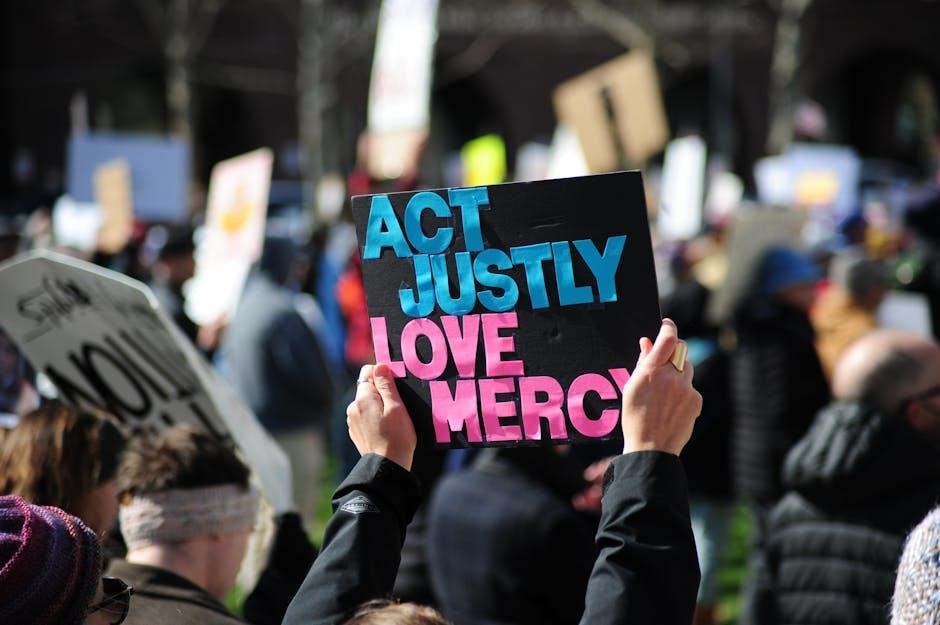
X. Activities & Exercises for Book Clubs
Enhance your book club discussions with engaging activities designed to deepen understanding and promote critical thinking. Conduct a mock jury deliberation, assigning roles and presenting arguments based on the evidence in Walter McMillian’s case, fostering a realistic exploration of the legal process.
Undertake research into current cases of wrongful conviction, comparing and contrasting them with McMillian’s story, and discussing the systemic factors contributing to these injustices. Organize a debate on the merits and drawbacks of the death penalty, referencing Stevenson’s arguments and exploring alternative sentencing options. Create a presentation on the Equal Justice Initiative and its ongoing work, inspiring further action and advocacy.
X.A. Mock Jury Deliberation

Recreate the atmosphere of Walter McMillian’s trial with a mock jury deliberation. Assign roles – jurors, prosecutor, defense attorney, and witnesses – and have participants prepare arguments based on the evidence presented in the book. Focus on analyzing the testimonies, identifying biases, and evaluating the credibility of witnesses like Ralph Myers.
Encourage jurors to discuss their initial impressions, challenge assumptions, and grapple with the complexities of the case. Emphasize the importance of reasonable doubt and the burden of proof. Conclude with a vote and a discussion of the challenges and responsibilities inherent in the jury system, mirroring the real-life struggles faced by McMillian.
X.B. Researching Current Cases of Wrongful Conviction
Extend the book’s impact by researching contemporary cases of wrongful conviction. Utilize resources like the Innocence Project and the National Registry of Exonerations to identify individuals who have been wrongly accused and imprisoned. Investigate the factors contributing to these miscarriages of justice – flawed eyewitness testimony, prosecutorial misconduct, and racial bias.
Compare and contrast these cases with Walter McMillian’s story, noting similarities in systemic failures and the challenges faced by those seeking exoneration. Discuss the ongoing need for legal reform and advocacy to prevent future wrongful convictions. Present findings to the book club, fostering awareness and inspiring action.
XI. Further Reading & Resources
To deepen your understanding of the issues explored in Just Mercy, consider exploring additional resources. The Innocence Project (https://innocenceproject.org/) offers vital information on wrongful convictions and their work to exonerate the wrongly accused. The Equal Justice Initiative (https://eji.org/), founded by Bryan Stevenson, provides extensive reports and data on racial and economic injustice in the US.
Explore Michelle Alexander’s The New Jim Crow for a comprehensive analysis of mass incarceration. Additionally, consider reading works by Ta-Nehisi Coates and Isabel Wilkerson to gain further insight into systemic racism. These resources will broaden your perspective and empower you to engage in meaningful conversations about justice reform.